
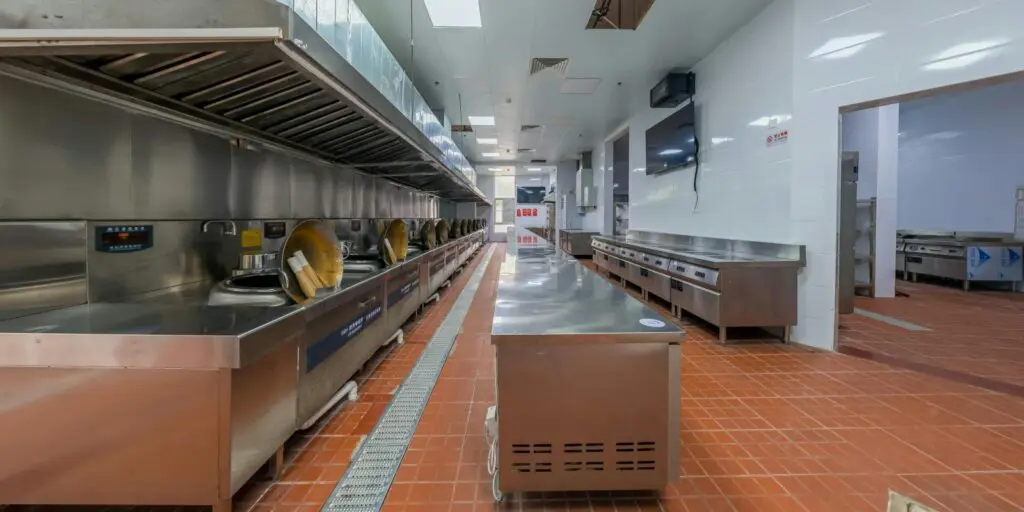
When flooring in your food or beverage facility starts to fail, it’s rarely a small problem.
What begins as minor cracks or worn coatings can quickly turn into sanitation risks, safety hazards, and costly downtime during inspections.
So what happens when your floors can’t keep up with constant moisture, aggressive cleaning chemicals, and heavy production traffic?
And how do those failures impact your ability to stay compliant, safe, and operational day after day?
In environments where cleanliness is critical, your flooring isn’t just a surface; it’s part of your sanitation system. When it breaks down, it can lead to contamination risks, slip hazards, and expensive disruptions you can’t afford.
At Polish Kraft, we specialize in restoring and upgrading existing concrete floors for demanding environments like food processing facilities, helping them perform under pressure without full replacement.
In this article, you’ll learn:
- What causes flooring failures in food and beverage environments
- The best flooring systems for sanitation, durability, and safety
- How to choose between polished concrete and resinous coating systems
Flooring Requirements for Food, Beverage, and Meat Processing Facilities
Food production environments are some of the most demanding spaces for concrete flooring.
Across beverage plants, meat processing facilities, and food preparation areas, floors must handle:
- Constant wet conditions from washdowns
- Harsh cleaning chemicals and sanitizers
- Heavy foot traffic and forklifts
- Temperature swings from freezers to hot processing zones
- Strict hygiene and inspection standards from the US Department of Agriculture (USDA) and Food and Drug Administration (FDA) guidelines
These conditions create a unique challenge. The flooring must be strong enough to resist damage but also smooth and seamless enough to allow proper cleaning and sanitation.
In many facilities, different zones also require different performance levels. A freezer room behaves differently from a bottling line or a prep kitchen. That means one flooring solution rarely works across the entire facility without variation.
Why Food Processing Floors Fail Over Time
Flooring failures are rarely sudden; they are the result of repeated stress that builds over time.
| Failure Cause | What’s Happening | What It Leads To in Your Facility |
| Moisture intrusion | Water seeps into cracks and weak points beneath the surface | Delamination, microbial growth, and hidden slab damage |
| Chemical exposure | Harsh cleaning agents slowly break down coatings and surface layers | Peeling, discoloration, and reduced coating lifespan |
| Thermal shock | Rapid shifts between hot washdowns and cold storage cause expansion/contraction | Cracking, joint failure, surface instability |
| Improper surface preparation | Coating or system fails to bond correctly to the concrete | Early system failure, peeling, and full rework costs |
| Heavy impact & traffic | Forklifts, carts, and equipment repeatedly stress the surface | Spalling, cracking, surface wear, and safety hazards |
Understanding these failure points is the first step in selecting the right flooring system for long-term performance.
Best Flooring Systems for Food and Beverage Facilities
There is no single “perfect” flooring system for every food or beverage facility. Instead, the best solution depends on the conditions of each area within the plant.
| Flooring System | Best Use Case | Key Benefits | Limitations |
| Polished Concrete | Dry or moderate-use production areas | Durable, low maintenance, abrasion resistance, clean appearance | Not ideal for heavy washdown without sealing |
| Epoxy / Urethane Coatings | High sanitation, wet processing areas | Seamless, chemical-resistant, easy to sanitize, slip-resistant options | Can require reapplication over time |
| Resinous Heavy-Duty Systems | Freezers, high-impact, extreme environments | Thermal shock resistance, high durability, and heavy load performance | Higher installation complexity and cost |
Flooring selection is not about choosing one system for the entire facility. It is about matching the system to the environment.
Use Case Flooring Cards by Facility Type
Meat, Poultry, and Seafood Facilities
Flooring manufacturers such as Sherwin-Williams note that meat, poultry, and seafood processing environments require flooring systems designed to withstand extreme sanitation demands, constant moisture, and heavy operational traffic while maintaining hygienic performance.
These facilities face:
- Animal fats, oils, blood, and organic acids
- Frequent high-pressure washdowns
- Heavy equipment and forklift traffic
- Strict sanitation and inspection standards
Floors must be seamless, non-porous, and chemically resistant to prevent moisture intrusion and bacterial growth. Even small cracks or porous surfaces can compromise hygiene and compliance. Properly engineered resinous flooring systems help support durable, slip-resistant, inspection-ready environments.
Beverage Production Flooring Requirements
These facilities face demanding flooring conditions that require specialized system performance.
Common challenges include:
- Constant moisture from washdowns and processing
- Sugar, acid, and ingredient spills that degrade concrete surfaces
- Carbonation-related corrosion risks in processing areas
- High-speed traffic from forklifts and production lines
Industry sources such as Sherwin-Williams flooring systems (e.g., Poly-Crete® systems) are often referenced for performance characteristics like chemical resistance, slip control, and drainage efficiency in food and beverage facilities. These environments also require compliance with USDA, FDA, and OSHA sanitation standards, making hygiene and safety critical.
Food Preparation Facility Flooring
Food preparation environments, such as commercial kitchens or prep facilities, require flooring that can handle:
- Continuous cleaning cycles
- Grease and oil exposure
- Foot traffic and carts
- Fast-paced production schedules
In these spaces, slip resistance and cleanability must be balanced carefully. Overly smooth floors can be unsafe, while highly textured surfaces may be harder to sanitize.
Resinous flooring systems are commonly used in these environments because they can be designed to balance slip resistance, chemical resistance, and cleanability for hygienic food preparation areas.
Learn more about commercial kitchen solutions here: Commercial and Industrial Kitchen Flooring
Why Concrete-Based Systems Perform Best
Most successful food and beverage flooring systems are built on concrete because of its strength and adaptability.
Concrete-based systems allow:
- Long-term durability under heavy use
- Compatibility with polishing and coating systems
- Custom performance by zone
- Cost-effective upgrades instead of full replacement
The key is not the concrete itself, but how it is prepared, repaired, and finished.
Slip Resistance, Safety, and Sanitation
One of the biggest challenges in food facility flooring is balancing safety with cleanability.
- Smooth surfaces are easier to clean but can become slippery when wet
- Textured surfaces improve traction but can be harder to sanitize
This is why many facilities use different finishes in different zones, depending on risk level and sanitation requirements.
Common Flooring Mistakes in Food Facilities
Many flooring failures come from avoidable decisions made early in the process.
Common mistakes include:
- Choosing flooring based only on upfront cost
- Ignoring moisture vapor coming through the slab
- Skipping proper surface preparation
- Using one system across all facility zones
- Delaying repairs until damage spreads
These common errors often lead to premature system failure and higher lifetime costs.
Recommended Flooring Approach for Food and Beverage Facilities in Southern Arkansas
Most food and beverage facilities see better results when flooring systems are matched to specific zones rather than relying on a single solution across the entire building. But does your current flooring actually reflect how each area is being used day to day? Dry production areas, wet processing zones, and temperature-controlled environments all place very different demands on concrete.
Where are you noticing the biggest issues right now? Is it coating breakdown in wet areas, surface wear in high-traffic zones, or sanitation concerns that keep coming back after repairs?
In many cases, these problems point to deeper substrate or system issues that surface fixes can’t fully resolve. That’s why the next step is a professional floor assessment, so you can understand what’s driving the failure and what will actually solve it. At Polish Kraft, we evaluate existing concrete flooring systems in food and beverage facilities and provide clear, condition-based recommendations. Schedule a floor inspection or consultation with our team so you can move forward with clarity and confidence.