
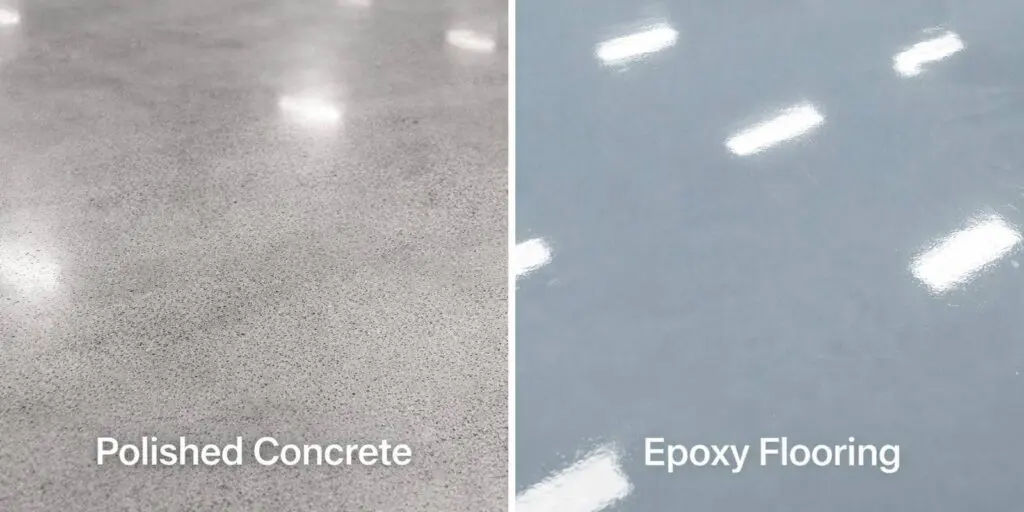
Are you trying to decide between epoxy flooring and polished concrete for a high-traffic space like a garage, warehouse, or commercial facility? This is one of the most common decisions property owners face when upgrading concrete floors.
Choosing the wrong system can get expensive fast. Epoxy coatings can peel or bubble, and some flooring systems simply do not hold up under daily wear. What looks great on installation day does not always perform well over time, which can lead to repairs, downtime, and ongoing frustration.
At PolishKraft, we help homeowners and businesses across Arkansas choose flooring systems based on how their space actually functions, not just how it looks when it is first installed. The goal is simple: a floor that performs long-term and fits the way your space is actually used.
In this guide, you will learn the key differences between polished concrete and epoxy flooring so you can confidently choose the right option for your space, budget, and usage needs.
What’s the Difference Between Epoxy and Polished Concrete?
Epoxy flooring is a coating that is applied on top of concrete. It creates a strong, sealed surface that protects against chemicals, spills, and heavy use.
Polished concrete is not a coating. It is your existing concrete that is ground, smoothed, and polished to create a dense and durable surface.
In simple terms:
- Epoxy adds a layer on top of the concrete.
- Polished concrete improves the concrete itself.
This difference plays a big role in how each option performs over time.
Epoxy vs Polished Concrete Comparison (Durability, Cost, Lifespan & Maintenance)
Here is a simple breakdown to help you see the differences quickly:
| Factor | Epoxy Flooring | Polished Concrete |
| Durability | Strong but can chip under heavy impact | Extremely durable, integrated into the slab |
| Lifespan | 5–10 years, depending on wear | 20+ years with minimal degradation |
| Maintenance | Requires re-coating over time | Very low maintenance |
| Cost | Higher upfront and repair costs | Lower long-term cost |
| Appearance | Wide color/design customization | Natural, industrial aesthetic |
| Installation Time | Faster installation | Longer process due to grinding/polishing |
Now let’s look at what these differences actually mean for you.
Which Flooring Is Better for Heavy Traffic Areas?
Both epoxy and polished concrete can handle heavy use, but they perform differently depending on the environment.
When Epoxy Performs Best
Epoxy is very resistant to impact and chemicals. This makes it a strong choice for spaces with machinery, vehicles, or chemical exposure. It creates a protective barrier that shields the concrete underneath.
When Polished Concrete Performs Best
Polished concrete is extremely strong against wear from foot traffic. It does not peel or chip like coatings can because there is no layer sitting on top. Over time, it holds up well in busy areas like retail spaces or warehouses.
That being said, epoxy is better for impact and chemical resistance, while polished concrete is better for long-term wear from constant traffic.
Which Flooring Option Lasts Longer?
Lifespan is one of the biggest differences between these two options.
Epoxy floors typically last between 5 and 10 years, depending on how the space is used. In high-traffic areas, they may need to be recoated sooner to maintain their performance.
Polished concrete can last 15 to 20 years or more with proper care. Because it is part of the concrete itself, there is no coating to wear away.
If you are thinking long term, polished concrete is usually the better investment.
Which Is Easier (and Cheaper) to Maintain Over Time?
Maintenance is where polished concrete really stands out.
Epoxy floors need regular cleaning and occasional recoating. Over time, the surface can show wear, especially in high-traffic areas or where vehicles are used.
Polished concrete is much simpler. It only needs basic cleaning, like sweeping and mopping. There is no need for waxing or frequent refinishing.
For most homeowners and businesses, polished concrete is the easier and more cost-effective option to maintain.
Which Flooring is More Affordable Long-Term?
Upfront cost varies depending on the condition of your concrete and the epoxy system selected.
Epoxy may sometimes appear competitive initially, but long-term costs increase due to:
- Recoating cycles
- Repairs and resurfacing
- Shorter lifespan
Polished concrete often has:
- Lower lifetime cost
- Fewer maintenance expenses
- No coating replacement cycles
The real difference is not just the initial price. It is what you will spend over time.
Which Looks Better in Commercial Spaces?
Appearance depends on what you are looking for.
Epoxy flooring offers:
- Solid colors
- Decorative flakes
- Metallic and high-gloss finishes
- Custom branding options
Polished concrete offers:
- Clean, modern industrial look
- Natural variation in the slab
- High reflectivity that brightens spaces
If customization matters, epoxy wins. If clean simplicity matters, polished concrete stands out.
When Epoxy Flooring Is the Better Choice
Epoxy is a strong option in the right situations.
It may be the better choice if:
- Your space is exposed to chemicals or oils.
- You have heavy equipment or machinery.
- You want a custom color or decorative finish.
- You need a protective coating over damaged concrete.
In these environments, epoxy provides an extra layer of protection that polished concrete cannot offer.
When Polished Concrete Is the Better Choice
Polished concrete is often the better fit for many everyday spaces.
It works well if:
- You have heavy foot traffic.
- You want low-maintenance flooring.
- You are working with a budget.
- You want a long-lasting solution.
- Your concrete is in good condition.
For homes, garages, retail spaces, and many commercial settings, polished concrete is a reliable and cost-effective option.
When Neither Option Is the Right Fit
There are situations where neither epoxy nor polished concrete is the best solution.
For example:
- If the concrete is severely damaged or uneven
- If there are major structural issues
- If the environment requires specialized coatings
In these cases, repairs or a different type of flooring may be needed before choosing a finish.
Being honest about this upfront helps avoid bigger problems later.
How to Choose Between Epoxy and Polished Concrete
Both epoxy and polished concrete are strong flooring options, but the right choice depends on how your space is used.
If you need protection from chemicals, heavy equipment, or want a customized look, epoxy may be the better fit. However, if you want a long-lasting, low-maintenance surface that handles heavy traffic well, polished concrete is often the smarter choice.
Which Flooring Should You Choose?
Choosing the right flooring can feel overwhelming, especially if you are trying to balance cost, durability, and long-term value.
Now that you understand the differences, the next step is to look at your space and how it is used every day. Traffic levels, exposure to damage, and maintenance expectations all play a role in making the right decision.
At PolishKraft, we help homeowners and businesses make flooring decisions based on real-world performance, not guesswork or generic recommendations. If you’re considering epoxy or polished concrete, we can help you determine the most durable and cost-effective solution for your specific space so you don’t end up paying twice for the wrong system.